
AI and Robotics in 2025: A Revolution in Motion
The Merging Minds of Machines
Artificial Intelligence (AI) and Robotics two domains once imagined only in science fiction are now merging to shape our everyday lives. From warehouse assistants and hospital caretakers to autonomous delivery bots, these intelligent machines are not only automating tasks but also thinking, adapting, and collaborating like never before. As we enter 2025, the convergence of AI and robotics is entering a pivotal phase: the transition from experimental prototypes to real-world deployment.
But this isn’t just about machines replacing humans. It’s about augmenting human potential, building safer environments, enabling 24/7 support systems, and addressing skill shortages across industries. The year 2025 marks a tipping point where AI is no longer just software in the cloud but is becoming a physical entity in our world.
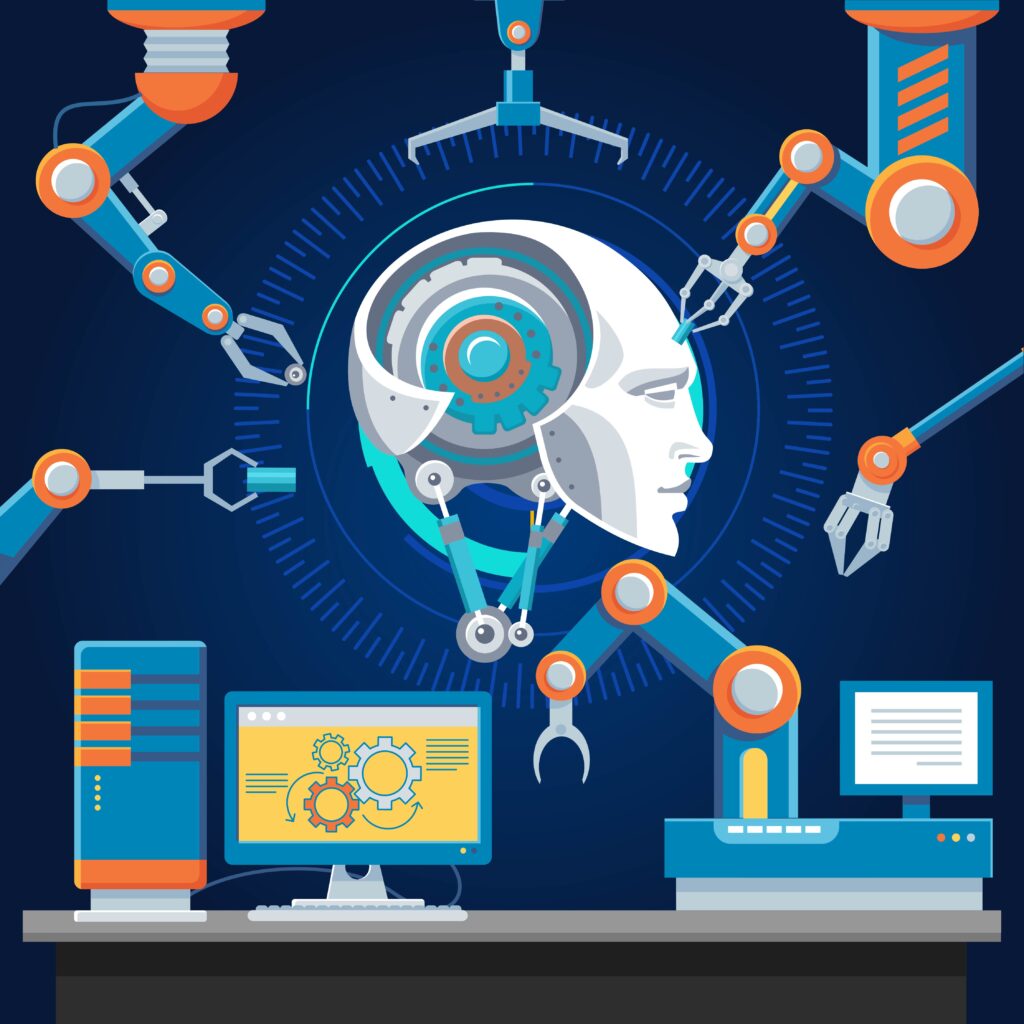
From Basic Bots to Intelligent Agents
To appreciate how far we’ve come, we must revisit the past. Early robotics relied heavily on rule-based AI rigid systems that could follow instructions but lacked adaptability. Over time, as machine learning evolved, so did robotics. Vision-based systems allowed robots to perceive environments; reinforcement learning enabled them to learn from interaction.
The introduction of neural networks, especially deep learning, propelled robotics into a new era. Robots learned to identify human faces, find their way through complex environments, and react naturally to spoken instructions mirroring how we communicate and move through the world. From Boston Dynamics’ Atlas to SoftBank’s Pepper, robots started resembling and reacting like living beings. Fast forward to 2025, we now see systems that can understand context, collaborate with humans, and even self-learn in dynamic settings.
Core Technologies Driving the Revolution
What’s driving this incredible leap in how robots and AI are coming together?
• Reinforcement Learning (RL): Much like how we learn from experience, RL enables robots to improve through repeated interactions with their surroundings. Whether it’s navigating a crowded warehouse or assisting in a busy hospital, these systems constantly refine their actions based on feedback, leading to smarter, more reliable performance over time.
• Vision-Language-Action (VLA) Models: These next-gen models combine computer vision, natural language understanding, and physical response. For example, a robot can now “see” a spilled cup, “understand” a human’s verbal request, and “act” to clean it up.
• Edge AI: By processing data locally on the robot (rather than the cloud), edge computing enables real-time response with enhanced privacy and lower latency essential for medical and industrial applications.
• Neuromorphic Computing: Inspired by the human brain, this technology allows robots to operate with minimal power, handling sensory data more efficiently and enabling better decision-making.
• Sim-to-Real Transfer Learning: Training robots in simulated environments before deploying them in the real world drastically reduces costs and risks. This also accelerates development time.
Key Trends and Sectors Being Transformed
In 2025, AI and robotics are not just about humanoids or high-tech labs. They’ve seamlessly woven themselves into the fabric of modern industries and our daily routines.
• Collaborative Robots (Cobots): Unlike traditional industrial robots, cobots work safely alongside humans in factories, clinics, and small businesses. They’re equipped with sensors and safety protocols to avoid accidents.
• Task-Specialized Robots: Logistics companies increasingly deploy robots for specific tasks package sorting, shelf scanning, or heavy lifting. These robots may not look human but excel at what they do.
• Healthcare Robotics: From robotic surgical assistants to patient-caring units that monitor vitals and deliver medication, robots are relieving overburdened medical staff and improving precision.
• Agricultural Robots: AI-powered drones and field robots are transforming farming. They identify pests, monitor crop health, and even automate harvesting.
• Security and Surveillance: AI robots now patrol malls, airports, and borders. They detect anomalies, issue alerts, and operate autonomously or with remote human oversight.
• Construction and Maintenance: Robots lay bricks, inspect bridges, and even climb buildings for repairs tasks once deemed too dangerous or labor-intensive.
Breakthroughs Defining 2025
Some of the most exciting advancements this year include:
• Skild AI’s General-Purpose Brain: A landmark innovation, this model enables multi-purpose robots to perform a variety of tasks with contextual understanding like climbing stairs or adapting grip based on object weight.
• Neura Robotics’ Cognitive Humanoid (4NE-1): With multi-sensory integration and human-like motion, this robot is designed to work in diverse environments from factories to elder-care facilities.
• NVIDIA’s GR00T N1 Model: A powerful foundation AI model that enables humanoid robots to understand complex commands and interact with humans using natural gestures and responses.
• Tesla Optimus Gen-3: Elon Musk’s bold venture, Optimus, is showing real-world applications in Tesla factories handling parts, assisting workers, and navigating dynamic spaces.
Applications Across Industries
The integration of robotics and AI is redefining industry standards:
• Manufacturing: The role of robots on factory floors has evolved beyond simple, repetitive actions. Today’s AI-powered machines adapt on the fly, shift between tasks, and work seamlessly with human colleagues in dynamic production environments. With AI, they now inspect quality, adapt to custom orders, and collaborate with humans on complex assembly lines.
• Retail: Service robots assist customers in navigating stores, managing inventory, and even answering FAQs using conversational AI.
• Transportation: Self-driving delivery robots and drones now operate in smart cities, optimizing logistics and reducing emissions.
• Hospitality: Hotels use AI-powered bots for room service, cleaning, and guest interaction, ensuring contactless and efficient service.
• Education: Robotic teaching assistants engage children with special needs, personalize content, and enhance hybrid learning experiences.
Sustainability and Governance in Robotics
As robots proliferate, sustainability and ethical governance become crucial.
• Eco-Friendly Design: Many robots are now built using recyclable materials, with low-energy requirements, and smart power modes to minimize environmental impact.
• Ethical Frameworks: Governments and institutions are establishing guidelines to ensure ethical use of AI in robotics especially in surveillance, defense, and decision-making.
• The K-Humanoid Alliance: South Korea’s initiative to standardize humanoid robot design and safety is a leading example of global cooperation for responsible innovation.
• EU AI Act (2025): This regulation mandates transparency, safety, and accountability in AI systems, pushing companies to build explainable and fair AI models.
Challenges Ahead
Despite incredible progress, several challenges remain:
• Human-Robot Trust: Users must feel safe and confident around robots. Designing intuitive interfaces, predictable behaviors, and fail-safes is key.
• Security Risks: AI systems can be vulnerable to cyber attacks. Ensuring secure data transmission and access controls is essential.
• Bias and Fairness: If training data is biased, robot behavior may reflect those biases leading to ethical dilemmas.
• Interoperability: Diverse robotics systems must communicate and integrate seamlessly. Common standards are still evolving.
• Affordability: Cutting-edge robotics remain expensive, limiting access for smaller businesses and developing regions.
Looking Forward: The Future of Physical AI
Robots with LLM-powered brains combining real-world sensors, context awareness, and decision-making are on the horizon. These are not just machines; they’re physical AI agents capable of learning, adapting, and growing.
By 2028, experts predict widespread deployment of humanoid robots in homes, offices, and cities. Companies like Nvidia, Tesla, Figure AI, and Neura are racing to bring this future to life.
We’re entering an age where robots won’t just follow commands, they’ll understand intent, predict needs, and collaborate like true partners.
Conclusion: More Than Just Machines
The AI and robotics revolution in 2025 is about more than just technology. It’s about reimagining what’s possible, expanding human capability, and designing a smarter, safer, and more inclusive world.
As we look ahead, one thing is clear: robots are no longer confined to fiction. They’re here, learning, adapting and becoming part of our daily lives.
Businesses, governments, and individuals must now ask: Not just what these robots can do, but what they should do. Because the future of AI and robotics isn’t built in isolation it’s shaped through collaboration, creativity, and shared human insight.